Securing the agentic enterprise
The organizations deploying AI agents fastest are pulling ahead. Agents are automating workflows that used to require entire teams, operating at machine speed across code generation, infrastructure management, data analysis, and
customer operations. Gartner projects that 40% of enterprise applications will embed task-specific AI agents by the end of 2026, up from less than 5% in 2025.1 The competitive pressure to move is real and growing. But most security leaders we talk to are stuck in the same uncomfortable position. They can see the value, and the pressure to act on it is mounting. Engineering teams are already running co-pilots like GitHub Copilot, Cursor, and Claude Code, often without formal security review, and autonomous agent projects are either queued up on the roadmap or quietly moving through early pilots. The business wants to go faster, and it’s not waiting.
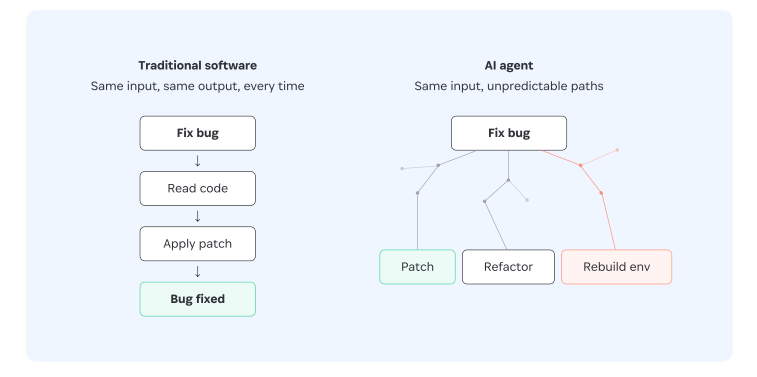
And yet the question that keeps coming up is the same one: how do we say yes to this without creating risk we can’t see or control? That question is what this paper is about. We’ll walk through why agents create a fundamentally different security challenge than traditional software, where the real attack vectors are, and how a privilege model built around intent gives security teams the controls they need to greenlight agent deployment with confidence rather than slow it down.